GHK-Cu (Copper Tripeptide)

Home / GHK-Cu (Copper Tripeptide)

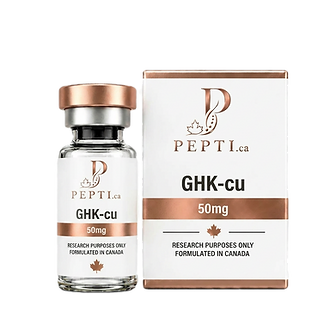
GHK-Cu (Copper Tripeptide)

Product Description & Research Overview

GHK-Cu (Glycyl-L-Histidyl-L-Lysine Copper) is a naturally occurring copper-binding tripeptide found in human plasma, saliva, and urine. It is one of the most extensively researched regenerative peptides due to its broad effects on tissue repair, skin rejuvenation, hair growth, and cellular health.

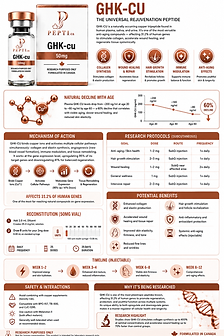
Natural GHK-Cu levels decline significantly with age—from approximately 200 ng/mL at age 20 to around 80 ng/mL by age 60—a reduction associated with slower wound healing, decreased collagen production, reduced skin elasticity, and other visible signs of aging.

Unlike many compounds that target a single biological pathway, GHK-Cu influences a remarkably broad range of cellular processes. Research suggests it may affect the expression of approximately 31% of human genes, promoting pathways involved in tissue regeneration while suppressing genes associated with excessive inflammation and tissue damage. This unique ability has made GHK-Cu one of the most widely studied peptides in regenerative medicine, cosmetic science, and healthy aging research.

Laboratory and animal studies have investigated GHK-Cu for its potential to stimulate collagen and elastin synthesis, promote angiogenesis (new blood vessel formation), accelerate wound healing, support hair follicle regeneration, modulate immune function, improve skin quality, and reduce oxidative stress.

Interesting Facts

  • Naturally occurring GHK-Cu levels decline by approximately 60% between ages 20 and 60.
  • One of the few naturally occurring peptides shown to influence approximately 31% of human gene expression in laboratory research.
  • Frequently studied in regenerative medicine, dermatology, cosmetic science, and wound healing.
  • Demonstrates both regenerative and anti-inflammatory properties across multiple tissue types.
  • Often researched alongside BPC-157, TB-500, and CJC-1295 for tissue repair applications.

Safety & Interactions

  • Generally well tolerated within researched dosing ranges.
  • Avoid combining with high-dose copper supplements unless specifically being studied, as excessive copper exposure may increase toxicity risk.
  • Frequently researched alongside BPC-157, TB-500, and CJC-1295 for regenerative applications.
  • Use caution when combining with Melanotan II, as both may influence pigmentation pathways.
Mechanism of Action

Research suggests GHK-Cu supports tissue regeneration through several complementary mechanisms:

  • Binds copper ions (Cu²⁺) to form a biologically active signaling complex.
  • Activates multiple cellular repair pathways involved in regeneration.
  • Stimulates collagen, elastin, and extracellular matrix production.
  • Promotes angiogenesis to improve blood supply to healing tissues.
  • Modulates gene expression by upregulating regenerative genes while downregulating inflammatory pathways.
  • Supports tissue remodeling and organized wound repair.
  • Helps regulate immune function and inflammatory responses.
  • Provides antioxidant protection against oxidative cellular damage.
  • Promotes hair follicle activity and supports healthy skin regeneration.
  • Increased collagen and elastin production
  • Accelerated wound healing and tissue repair
  • Improved skin elasticity, firmness, and tone
  • Reduction in fine lines and wrinkles
  • Hair follicle stimulation and hair growth support
  • Anti-inflammatory and antioxidant activity
  • Systemic regenerative support when researched via injection

Goal

Dose

Route

Frequency

Anti-Aging / Skin Health
1–2 mg
SubQ
Once daily
Hair Growth Stimulation
2–3 mg
SubQ
Once daily
Wound Healing
1–2 mg
SubQ near affected area
Twice daily
General Wellness
1 mg
SubQ
Once daily
Intensive Repair
2–3 mg
SubQ
Once daily

Reconstitution (50 mg Vial)

Step 1

Add 2.0 mL diluent.

Creates a 25 mg/mL solution.

Step 2

Draw 8 units for a 2 mg dose.

  • 08 mL on a standard insulin syringe
  • 100-unit insulin syringe

Quick Reference

Frequency: Daily

Doses per vial: 25 doses (at 2 mg)

Approximate vial duration: 25 days

Disclaimer

For research use only. Not for human consumption.

The dosing information provided is intended solely for laboratory and research purposes and is not medical advice. Always consult qualified professionals regarding research protocols.

These statements have not been evaluated by Health Canada or the U.S. Food and Drug Administration (FDA).

Mechanism of Action

Research suggests GHK-Cu supports tissue regeneration through several complementary mechanisms:

  • Binds copper ions (Cu²⁺) to form a biologically active signaling complex.
  • Activates multiple cellular repair pathways involved in regeneration.
  • Stimulates collagen, elastin, and extracellular matrix production.
  • Promotes angiogenesis to improve blood supply to healing tissues.
  • Modulates gene expression by upregulating regenerative genes while downregulating inflammatory pathways.
  • Supports tissue remodeling and organized wound repair.
  • Helps regulate immune function and inflammatory responses.
  • Provides antioxidant protection against oxidative cellular damage.
  • Promotes hair follicle activity and supports healthy skin regeneration.
  • Increased collagen and elastin production
  • Accelerated wound healing and tissue repair
  • Improved skin elasticity, firmness, and tone
  • Reduction in fine lines and wrinkles
  • Hair follicle stimulation and hair growth support
  • Anti-inflammatory and antioxidant activity
  • Systemic regenerative support when researched via injection

Goal

Dose

Route

Frequency

Anti-Aging / Skin Health
1–2 mg
SubQ
Once daily
Hair Growth Stimulation
2–3 mg
SubQ
Once daily
Wound Healing
1–2 mg
SubQ near affected area
Twice daily
General Wellness
1 mg
SubQ
Once daily
Intensive Repair
2–3 mg
SubQ
Once daily

Reconstitution (50 mg Vial)

Step 1

Add 2.0 mL diluent.

Creates a 25 mg/mL solution.

Step 2

Draw 8 units for a 2 mg dose.

  • 08 mL on a standard insulin syringe
  • 100-unit insulin syringe

Quick Reference

Frequency: Daily

Doses per vial: 25 doses (at 2 mg)

Approximate vial duration: 25 days

Week 1–2

Initial Response

Weeks 3–4

Early Regeneration

Weeks 6–8

Visible Improvements

Weeks 8–12

Longer-Term Benefits

Timeline

Week 1–2

Initial Response

Weeks 3–4

Early Regeneration

Weeks 6–8

Visible Improvements

Weeks 8–12

Longer-Term Benefits

PRODUCT USAGE DISCLAIMER

This product is intended strictly for research and laboratory purposes only. It is not approved for human or veterinary use. This compound is supplied exclusively for in-vitro research, analytical testing, and scientific investigation.

All information provided on this website is for educational and research reference purposes only. These products are not drugs, supplements, food products, or cosmetics and must not be used, consumed, or administered to humans or animals.

By purchasing, the customer acknowledges that these products are intended solely for qualified research professionals and must be handled according to appropriate laboratory safety guidelines.

Mechanism of Action

Research suggests GHK-Cu supports tissue regeneration through several complementary mechanisms:

  • Binds copper ions (Cu²⁺) to form a biologically active signaling complex.
  • Activates multiple cellular repair pathways involved in regeneration.
  • Stimulates collagen, elastin, and extracellular matrix production.
  • Promotes angiogenesis to improve blood supply to healing tissues.
  • Modulates gene expression by upregulating regenerative genes while downregulating inflammatory pathways.
  • Supports tissue remodeling and organized wound repair.
  • Helps regulate immune function and inflammatory responses.
  • Provides antioxidant protection against oxidative cellular damage.
  • Promotes hair follicle activity and supports healthy skin regeneration.

Potential Benefits

No data was found

Research Protocols

Goal

Dose

Route

Frequency

Anti-Aging / Skin Health
1–2 mg
SubQ
Once daily
Hair Growth Stimulation
2–3 mg
SubQ
Once daily
Wound Healing
1–2 mg
SubQ near affected area
Twice daily
General Wellness
1 mg
SubQ
Once daily
Intensive Repair
2–3 mg
SubQ
Once daily

Mechanism of Action

Reconstitution (50 mg Vial)

Step 1

Add 2.0 mL diluent.

Creates a 25 mg/mL solution.

Step 2

Draw 8 units for a 2 mg dose.

  • 08 mL on a standard insulin syringe
  • 100-unit insulin syringe

Quick Reference

Frequency: Daily

Doses per vial: 25 doses (at 2 mg)

Approximate vial duration: 25 days

Research Protocols

Goal

Dose

Route

Frequency

Anti-Aging / Skin Health
1–2 mg
SubQ
Once daily
Hair Growth Stimulation
2–3 mg
SubQ
Once daily
Wound Healing
1–2 mg
SubQ near affected area
Twice daily
General Wellness
1 mg
SubQ
Once daily
Intensive Repair
2–3 mg
SubQ
Once daily

Timeline

Week 1–2

Initial Response

Weeks 3–4

Early Regeneration

Weeks 6–8

Visible Improvements

Weeks 8–12

Longer-Term Benefits

Related Products