Product Description & Research Overview
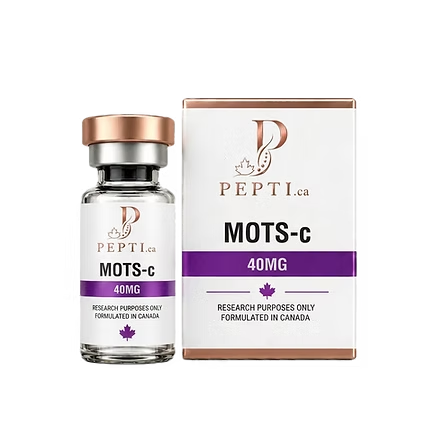
MOTS-c is a naturally occurring mitochondrial-derived peptide (MDP) encoded by mitochondrial DNA. Often referred to as a “mitohormone,” it functions as a cellular signaling molecule that helps regulate energy metabolism, mitochondrial function, and metabolic adaptation during periods of physiological stress.
Unlike many peptides that act through hormone receptors, MOTS-c primarily influences cellular metabolism by activating the AMP-activated protein kinase (AMPK) pathway, one of the body’s master regulators of energy balance. Through this mechanism, researchers have investigated its potential to improve insulin sensitivity, glucose utilization, mitochondrial efficiency, exercise performance, body composition, and healthy aging.
MOTS-c has become a major focus of metabolic and longevity research because it targets cellular energy production at its source—the mitochondria. Laboratory and animal studies suggest it may improve metabolic flexibility, enhance resistance to cellular stress, support healthy aging, and increase physical endurance. Researchers are also investigating its potential role in obesity, insulin resistance, type 2 diabetes, age-related metabolic decline, and exercise performance. While the preclinical evidence is promising, human clinical research remains ongoing.
Research suggests MOTS-c supports metabolic health through several complementary mechanisms:
Reconstitution (40 mg Vial)
Step 1
Add 3.0 mL diluent.
Creates a 13.33 mg/mL solution.
Step 2
Draw 10 units for approximately a 1.33 mg dose.
(The infographic rounds this to 1.35 mg.)
Quick Reference
Frequency: Daily (microdosing protocols) or 1–3× weekly depending on research protocol
Doses per vial: Approximately 29 doses (at ~1.35 mg)
Approximate vial duration: Approximately 4 weeks and 1 day
Disclaimer
For research use only. Not for human consumption.
The dosing information provided is intended solely for laboratory and research purposes and is not medical advice. Always consult qualified professionals regarding research protocols.
These statements have not been evaluated by Health Canada or the U.S. Food and Drug Administration (FDA).
Research suggests MOTS-c supports metabolic health through several complementary mechanisms:
Reconstitution (40 mg Vial)
Step 1
Add 3.0 mL diluent.
Creates a 13.33 mg/mL solution.
Step 2
Draw 10 units for approximately a 1.33 mg dose.
(The infographic rounds this to 1.35 mg.)
Quick Reference
Frequency: Daily (microdosing protocols) or 1–3× weekly depending on research protocol
Doses per vial: Approximately 29 doses (at ~1.35 mg)
Approximate vial duration: Approximately 4 weeks and 1 day
Early Metabolic Response
Improved Performance
Continued Benefits
Long-Term Adaptation
Early Metabolic Response
Improved Performance
Continued Benefits
Long-Term Adaptation
Research suggests MOTS-c supports metabolic health through several complementary mechanisms:
Reconstitution (40 mg Vial)
Step 1
Add 3.0 mL diluent.
Creates a 13.33 mg/mL solution.
Step 2
Draw 10 units for approximately a 1.33 mg dose.
(The infographic rounds this to 1.35 mg.)
Quick Reference
Frequency: Daily (microdosing protocols) or 1–3× weekly depending on research protocol
Doses per vial: Approximately 29 doses (at ~1.35 mg)
Approximate vial duration: Approximately 4 weeks and 1 day
Early Metabolic Response
Improved Performance
Continued Benefits
Long-Term Adaptation