
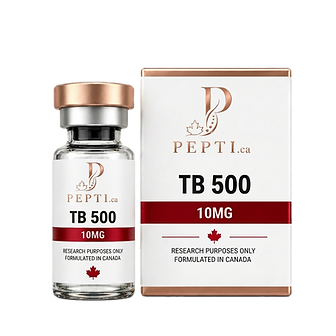
TB 500 10mg

Home / TB 500 10mg

TB 500 10mg

TB-500 (Thymosin Beta-4 Fragment)

Product Description & Research Overview

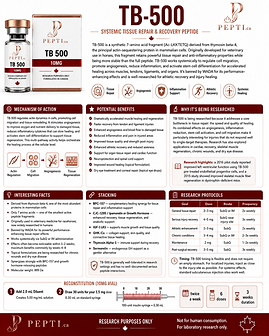
TB-500 is a synthetic 7-amino acid peptide fragment (Ac-LKKTETQ) derived from Thymosin Beta-4, one of the body’s naturally occurring proteins involved in tissue repair and regeneration. Unlike the full Thymosin Beta-4 protein, TB-500 is smaller, more stable, and designed to retain many of the regenerative properties associated with the parent molecule.

TB-500 has become one of the most extensively researched peptides for systemic tissue repair because it promotes cell migration, angiogenesis (new blood vessel formation), tissue remodeling, and recovery following injury. Rather than acting only at the injection site, TB-500 appears to circulate systemically, making it a unique option for supporting muscles, tendons, ligaments, connective tissue, and organs throughout the body.

Researchers continue to investigate TB-500 for its potential to accelerate recovery following musculoskeletal injuries, reduce inflammation, improve wound healing, support cardiac repair, enhance exercise recovery, and promote overall tissue regeneration. Because it influences multiple stages of the healing process simultaneously, it has become a cornerstone peptide in regenerative medicine and recovery research.

$70.00

Mechanism of Action

Research suggests TB-500 supports tissue repair through several complementary mechanisms:

  • Regulates actin dynamics to support cellular movement and repair.
  • Promotes cell migration to damaged tissues.
  • Stimulates angiogenesis (new blood vessel formation).
  • Improves oxygen and nutrient delivery to healing tissues.
  • Reduces inflammatory cytokine activity during tissue repair.
  • Supports stem cell recruitment and tissue regeneration.
  • Promotes extracellular matrix remodeling and connective tissue healing.
  • Enhances recovery across muscles, tendons, ligaments, and soft tissues.
  • Supports accelerated muscle repair and regeneration
  • May improve recovery from tendon and ligament injuries
  • Promotes angiogenesis and healthy blood flow to damaged tissue
  • Helps reduce inflammation and discomfort during recovery
  • Supports stronger, healthier connective tissue following injury
  • May improve exercise recovery and reduce muscle soreness
  • Supports cardiac tissue repair in ongoing research
  • Investigated for wound healing, dry eye, and corneal repair

Goal

Dose

Route

Frequency

General Tissue Repair
2–3 mg
SubQ or IM
Twice weekly
Serious Injury Recovery
4–5 mg
SubQ near injury or IM
Three times weekly
Athletic Recovery
2–3 mg
SubQ
Twice weekly
Chronic Conditions
3–4 mg
SubQ or IM
2–3× weekly
Maintenance
2 mg
SubQ
1–2× weekly
Post-Surgical Recovery
3–5 mg
SubQ
Three times weekly

Reconstitution (10 mg Vial)

Step 1

Add 2.0 mL diluent.

Creates a 5.0 mg/mL solution.

Step 2

Draw 30 units for a 1.5 mg dose.

  • 30 mL on a standard insulin syringe
  • 100-unit insulin syringe

Quick Reference

Frequency: Twice weekly

Doses per vial: Approximately 6 doses (at 1.5 mg)

Approximate vial duration: Approximately 3 weeks

Disclaimer

For research use only. Not for human consumption.

The information provided is intended solely for laboratory and research purposes and is not medical advice. Always consult qualified professionals regarding research protocols.

Mechanism of Action

Research suggests TB-500 supports tissue repair through several complementary mechanisms:

  • Regulates actin dynamics to support cellular movement and repair.
  • Promotes cell migration to damaged tissues.
  • Stimulates angiogenesis (new blood vessel formation).
  • Improves oxygen and nutrient delivery to healing tissues.
  • Reduces inflammatory cytokine activity during tissue repair.
  • Supports stem cell recruitment and tissue regeneration.
  • Promotes extracellular matrix remodeling and connective tissue healing.
  • Enhances recovery across muscles, tendons, ligaments, and soft tissues.
  • Supports accelerated muscle repair and regeneration
  • May improve recovery from tendon and ligament injuries
  • Promotes angiogenesis and healthy blood flow to damaged tissue
  • Helps reduce inflammation and discomfort during recovery
  • Supports stronger, healthier connective tissue following injury
  • May improve exercise recovery and reduce muscle soreness
  • Supports cardiac tissue repair in ongoing research
  • Investigated for wound healing, dry eye, and corneal repair

Goal

Dose

Route

Frequency

General Tissue Repair
2–3 mg
SubQ or IM
Twice weekly
Serious Injury Recovery
4–5 mg
SubQ near injury or IM
Three times weekly
Athletic Recovery
2–3 mg
SubQ
Twice weekly
Chronic Conditions
3–4 mg
SubQ or IM
2–3× weekly
Maintenance
2 mg
SubQ
1–2× weekly
Post-Surgical Recovery
3–5 mg
SubQ
Three times weekly

Reconstitution (10 mg Vial)

Step 1

Add 2.0 mL diluent.

Creates a 5.0 mg/mL solution.

Step 2

Draw 30 units for a 1.5 mg dose.

  • 30 mL on a standard insulin syringe
  • 100-unit insulin syringe

Quick Reference

Frequency: Twice weekly

Doses per vial: Approximately 6 doses (at 1.5 mg)

Approximate vial duration: Approximately 3 weeks

1–2 Weeks

Early Recovery

2–4 Weeks

Tissue Repair

4–8 Weeks

Continued Regeneration

Timeline

1–2 Weeks

Early Recovery

2–4 Weeks

Tissue Repair

4–8 Weeks

Continued Regeneration

PRODUCT USAGE DISCLAIMER

This product is intended strictly for research and laboratory purposes only. It is not approved for human or veterinary use. This compound is supplied exclusively for in-vitro research, analytical testing, and scientific investigation.

All information provided on this website is for educational and research reference purposes only. These products are not drugs, supplements, food products, or cosmetics and must not be used, consumed, or administered to humans or animals.

By purchasing, the customer acknowledges that these products are intended solely for qualified research professionals and must be handled according to appropriate laboratory safety guidelines.

Mechanism of Action

Research suggests TB-500 supports tissue repair through several complementary mechanisms:

  • Regulates actin dynamics to support cellular movement and repair.
  • Promotes cell migration to damaged tissues.
  • Stimulates angiogenesis (new blood vessel formation).
  • Improves oxygen and nutrient delivery to healing tissues.
  • Reduces inflammatory cytokine activity during tissue repair.
  • Supports stem cell recruitment and tissue regeneration.
  • Promotes extracellular matrix remodeling and connective tissue healing.
  • Enhances recovery across muscles, tendons, ligaments, and soft tissues.

Potential Benefits

Supports accelerated muscle repair and regeneration
May improve recovery from tendon and ligament injuries
Promotes angiogenesis and healthy blood flow to damaged tissue
Helps reduce inflammation and discomfort during recovery
Supports stronger, healthier connective tissue following injury
May improve exercise recovery and reduce muscle soreness
Supports cardiac tissue repair in ongoing research
Investigated for wound healing, dry eye, and corneal repair
Improved wound healing (topical formulation)
Dry eye treatment and corneal repair (topical eye drops)

Research Protocols

Goal

Dose

Route

Frequency

General Tissue Repair
2–3 mg
SubQ or IM
Twice weekly
Serious Injury Recovery
4–5 mg
SubQ near injury or IM
Three times weekly
Athletic Recovery
2–3 mg
SubQ
Twice weekly
Chronic Conditions
3–4 mg
SubQ or IM
2–3× weekly
Maintenance
2 mg
SubQ
1–2× weekly
Post-Surgical Recovery
3–5 mg
SubQ
Three times weekly

Mechanism of Action

Reconstitution (10 mg Vial)

Step 1

Add 2.0 mL diluent.

Creates a 5.0 mg/mL solution.

Step 2

Draw 30 units for a 1.5 mg dose.

  • 30 mL on a standard insulin syringe
  • 100-unit insulin syringe

Quick Reference

Frequency: Twice weekly

Doses per vial: Approximately 6 doses (at 1.5 mg)

Approximate vial duration: Approximately 3 weeks

Research Protocols

Goal

Dose

Route

Frequency

General Tissue Repair
2–3 mg
SubQ or IM
Twice weekly
Serious Injury Recovery
4–5 mg
SubQ near injury or IM
Three times weekly
Athletic Recovery
2–3 mg
SubQ
Twice weekly
Chronic Conditions
3–4 mg
SubQ or IM
2–3× weekly
Maintenance
2 mg
SubQ
1–2× weekly
Post-Surgical Recovery
3–5 mg
SubQ
Three times weekly

Timeline

1–2 Weeks

Early Recovery

2–4 Weeks

Tissue Repair

4–8 Weeks

Continued Regeneration

Related Products