Glutathione

Home / Glutathione

Glutathione

Product Description & Research Overview

Glutathione is a naturally occurring tripeptide composed of three amino acids—glutamate, cysteine, and glycine—and is often referred to as the body’s “master antioxidant.” Found in virtually every cell, it plays a critical role in protecting tissues from oxidative stress, supporting detoxification pathways, recycling other antioxidants, and maintaining normal immune function.

One of glutathione’s primary functions is neutralizing reactive oxygen species (free radicals), helping protect DNA, proteins, lipids, and cellular structures from oxidative damage. It also supports Phase II liver detoxification by binding toxins, heavy metals, and metabolic byproducts, allowing them to be safely eliminated from the body. In addition, glutathione regenerates antioxidants such as vitamins C and E, helping maintain the body’s natural antioxidant defenses.

Natural glutathione production declines with age, chronic stress, illness, environmental toxin exposure, and poor nutrition, with plasma levels estimated to decrease by approximately 30–40% over a lifetime. Because oxidative stress is associated with aging and numerous chronic conditions, glutathione has become one of the most extensively researched antioxidants for healthy aging, immune support, liver health, neurological function, and cellular recovery. Researchers continue to investigate its potential role in supporting skin health, exercise recovery, neuroprotection, and overall cellular resilience.

Mechanism of Action

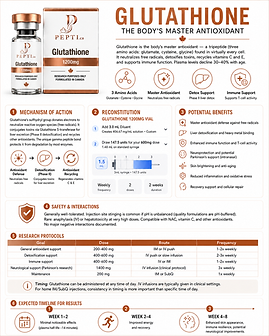
Research suggests glutathione supports cellular health through several complementary mechanisms:

  • Neutralizes reactive oxygen species (free radicals) by donating electrons.
  • Protects DNA, proteins, lipids, and mitochondria from oxidative damage.
  • Supports Phase II liver detoxification through glutathione S-transferase (GST) pathways.
  • Binds toxins, heavy metals, and metabolic waste to facilitate elimination.
  • Regenerates antioxidants including vitamins C and E after oxidation.
  • Helps maintain healthy immune function by supporting T-cell activity.
  • Supports mitochondrial function and overall cellular energy production.
  • Reduces oxidative stress and helps regulate inflammatory responses.
  • Powerful antioxidant protection against free radical damage
  • Supports liver detoxification and heavy metal elimination
  • Promotes healthy immune function and T-cell activity
  • Neuroprotective support and ongoing neurological health research
  • Supports brighter, healthier-looking skin and healthy aging
  • Reduces oxidative stress and inflammation
  • Supports cellular repair and exercise recovery

Goal

Dose

Route

Frequency

No data was found

Timing: Glutathione may be administered at any time of day.

Reconstitution (600 mg Vial)

Step 1

Add 3.0 mL diluent.

Step 2

Draw 1 mL (100 units) for a 200 mg dose.

  • 1 mL on a 1 mL syringe
  • Approximately 100 units

Quick Reference

Frequency: 3 times/week

Doses per vial: 3 doses (at 200 mg)

Approximate vial duration: 1 week

Reconstitution (1500 mg Vial)

Step 1

Add 6.0 mL diluent.

Step 2

Draw .8 mL (80 units) for a 200 mg dose.

Quick Reference

Frequency: 3 times/week

Doses per vial: 7 doses (at 200 mg)

Approximate vial duration: 2 weeks plus 1 day

Interesting Facts

  • Considered the body’s primary endogenous antioxidant.
  • Present in virtually every human cell.
  • Plasma glutathione levels decline approximately 30–40% with age.
  • Required for normal recycling of vitamins C and E.
  • Frequently researched alongside NAC (N-acetylcysteine), vitamin C, alpha-lipoic acid, and other antioxidant therapies.
  • One of the most extensively studied compounds for cellular protection and detoxification.

Safety & Interactions

  • Generally well tolerated within researched dosing ranges.
  • Mild injection-site discomfort or stinging may occur, particularly if solutions are not properly buffered.
  • Severe allergic reactions are rare but have been reported, primarily with intravenous administration.
  • Frequently researched alongside NAC, vitamin C, alpha-lipoic acid, and other antioxidant compounds.
  • No well-established major negative interactions have been identified in the current research literature.

Disclaimer

For research use only. Not for human consumption.

The dosing information provided is intended solely for laboratory and research purposes and is not medical advice. Always consult qualified professionals regarding research protocols.

These statements have not been evaluated by Health Canada or the U.S. Food and Drug Administration (FDA).

Mechanism of Action

Research suggests glutathione supports cellular health through several complementary mechanisms:

  • Neutralizes reactive oxygen species (free radicals) by donating electrons.
  • Protects DNA, proteins, lipids, and mitochondria from oxidative damage.
  • Supports Phase II liver detoxification through glutathione S-transferase (GST) pathways.
  • Binds toxins, heavy metals, and metabolic waste to facilitate elimination.
  • Regenerates antioxidants including vitamins C and E after oxidation.
  • Helps maintain healthy immune function by supporting T-cell activity.
  • Supports mitochondrial function and overall cellular energy production.
  • Reduces oxidative stress and helps regulate inflammatory responses.
  • Powerful antioxidant protection against free radical damage
  • Supports liver detoxification and heavy metal elimination
  • Promotes healthy immune function and T-cell activity
  • Neuroprotective support and ongoing neurological health research
  • Supports brighter, healthier-looking skin and healthy aging
  • Reduces oxidative stress and inflammation
  • Supports cellular repair and exercise recovery

Goal

Dose

Route

Frequency

No data was found

Timing: Glutathione may be administered at any time of day.

Reconstitution (600 mg Vial)

Step 1

Add 3.0 mL diluent.

Step 2

Draw 1 mL (100 units) for a 200 mg dose.

  • 1 mL on a 1 mL syringe
  • Approximately 100 units

Quick Reference

Frequency: 3 times/week

Doses per vial: 3 doses (at 200 mg)

Approximate vial duration: 1 week

Reconstitution (1500 mg Vial)

Step 1

Add 6.0 mL diluent.

Step 2

Draw .8 mL (80 units) for a 200 mg dose.

Quick Reference

Frequency: 3 times/week

Doses per vial: 7 doses (at 200 mg)

Approximate vial duration: 2 weeks plus 1 day

Interesting Facts

  • Considered the body’s primary endogenous antioxidant.
  • Present in virtually every human cell.
  • Plasma glutathione levels decline approximately 30–40% with age.
  • Required for normal recycling of vitamins C and E.
  • Frequently researched alongside NAC (N-acetylcysteine), vitamin C, alpha-lipoic acid, and other antioxidant therapies.
  • One of the most extensively studied compounds for cellular protection and detoxification.

Week 1–2

Initial Response

Weeks 2–4

Increased Cellular Support

Weeks 4–8

Longer-Term Benefits

Timeline

Week 1–2

Initial Response

Weeks 2–4

Increased Cellular Support

Weeks 4–8

Longer-Term Benefits

PRODUCT USAGE DISCLAIMER

This product is intended strictly for research and laboratory purposes only. It is not approved for human or veterinary use. This compound is supplied exclusively for in-vitro research, analytical testing, and scientific investigation.

All information provided on this website is for educational and research reference purposes only. These products are not drugs, supplements, food products, or cosmetics and must not be used, consumed, or administered to humans or animals.

By purchasing, the customer acknowledges that these products are intended solely for qualified research professionals and must be handled according to appropriate laboratory safety guidelines.

Mechanism of Action

Research suggests glutathione supports cellular health through several complementary mechanisms:

  • Neutralizes reactive oxygen species (free radicals) by donating electrons.
  • Protects DNA, proteins, lipids, and mitochondria from oxidative damage.
  • Supports Phase II liver detoxification through glutathione S-transferase (GST) pathways.
  • Binds toxins, heavy metals, and metabolic waste to facilitate elimination.
  • Regenerates antioxidants including vitamins C and E after oxidation.
  • Helps maintain healthy immune function by supporting T-cell activity.
  • Supports mitochondrial function and overall cellular energy production.
  • Reduces oxidative stress and helps regulate inflammatory responses.

Potential Benefits

No data was found

Research Protocols

Goal

Dose

Route

Frequency

No data was found

Mechanism of Action

Timing: Glutathione may be administered at any time of day.

Reconstitution (600 mg Vial)

Step 1

Add 3.0 mL diluent.

Step 2

Draw 1 mL (100 units) for a 200 mg dose.

  • 1 mL on a 1 mL syringe
  • Approximately 100 units

Quick Reference

Frequency: 3 times/week

Doses per vial: 3 doses (at 200 mg)

Approximate vial duration: 1 week

Reconstitution (1500 mg Vial)

Step 1

Add 6.0 mL diluent.

Step 2

Draw .8 mL (80 units) for a 200 mg dose.

Quick Reference

Frequency: 3 times/week

Doses per vial: 7 doses (at 200 mg)

Approximate vial duration: 2 weeks plus 1 day

Interesting Facts

  • Considered the body's primary endogenous antioxidant.
  • Present in virtually every human cell.
  • Plasma glutathione levels decline approximately 30–40% with age.
  • Required for normal recycling of vitamins C and E.
  • Frequently researched alongside NAC (N-acetylcysteine), vitamin C, alpha-lipoic acid, and other antioxidant therapies.
  • One of the most extensively studied compounds for cellular protection and detoxification.

Research Protocols

Goal

Dose

Route

Frequency

No data was found

Timeline

Week 1–2

Initial Response

Weeks 2–4

Increased Cellular Support

Weeks 4–8

Longer-Term Benefits

Related Products