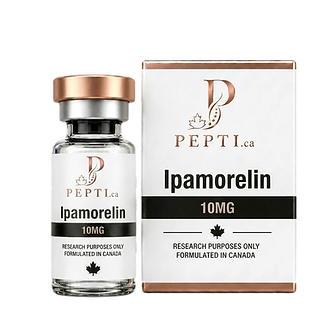
Ipamorelin

Home / Ipamorelin

Ipamorelin

Product Description & Research Overview

Ipamorelin is a selective growth hormone secretagogue (GHS) that stimulates the body’s natural release of growth hormone by activating ghrelin receptors within the pituitary gland. Unlike many earlier growth hormone secretagogues, Ipamorelin has demonstrated a high degree of receptor selectivity, allowing it to promote growth hormone release with minimal stimulation of cortisol, prolactin, or acetylcholine.

Its relatively short half-life of approximately two hours allows growth hormone to be released in natural, pulsatile patterns that more closely resemble normal physiology. Because of this selective mechanism, Ipamorelin has become one of the most extensively researched peptides for muscle development, recovery, body composition, sleep quality, and healthy aging.

Researchers continue to investigate Ipamorelin for its potential to increase lean muscle mass, enhance recovery following exercise, improve collagen production, support fat metabolism while preserving muscle tissue, and improve sleep quality. It is frequently studied alone or in combination with GHRH peptides such as CJC-1295 No DAC or Sermorelin to examine synergistic effects on natural growth hormone secretion.

Mechanism of Action

Research suggests Ipamorelin supports natural growth hormone release through several complementary mechanisms:

  • Selectively binds to ghrelin (GHS-R1a) receptors on pituitary somatotroph cells.
  • Stimulates pulsatile release of endogenous growth hormone (GH).
  • Produces minimal stimulation of cortisol, prolactin, and acetylcholine compared with many earlier growth hormone secretagogues.
  • Supports increased insulin-like growth factor-1 (IGF-1) production following GH release.
  • Promotes muscle recovery, protein synthesis, and tissue repair.
  • Supports fat metabolism while helping preserve lean muscle mass.
  • Appears less likely to promote receptor desensitization due to its short half-life and physiologic GH pulse pattern.
  • Supports natural pulsatile growth hormone release
  • Increased lean muscle mass and strength
  • Enhanced recovery from training and reduced muscle soreness
  • Improved sleep quality and REM sleep duration
  • Supports collagen production and healthy skin
  • Increased bone density and connective tissue support
  • Supports fat loss while preserving lean muscle mass
  • Minimal impact on cortisol and prolactin levels

Goal

Dose

Route

Frequency

No data was found

Timing: Ipamorelin is commonly researched on an empty stomach to minimize insulin interference with growth hormone release. Morning (fasted), pre-workout, or approximately 30 minutes before bedtime are the most frequently studied administration times depending on research objectives.

Reconstitution (10 mg Vial)

Step 1

Add 3.0 mL diluent.

Creates a 3.33 mg/mL solution.

Step 2

Draw 9 units (approximately 0.09 mL) for a 300 mcg dose.

  • 09 mL on a standard insulin syringe
  • Approximately 9 units on a 100-unit insulin syringe

Note: The infographic rounds this to 10 units, but mathematically a 10 mg vial reconstituted with 3.0 mL yields a concentration of 3.33 mg/mL, so a 300 mcg dose is approximately 9 units. If you prefer a clean 10-unit draw, reconstituting with 3.33 mL of diluent would achieve exactly 3 mg/mL, making 10 units = 300 mcg.

Quick Reference

Frequency: Daily

Approximate dose: 300 mcg

Approximate vial duration: About 4 weeks (33 doses at 300 mcg from a 10 mg vial)

Stacking Considerations

Ipamorelin is frequently researched alongside:

  • CJC-1295 No DAC for synergistic pulsatile growth hormone release.
  • Sermorelin to further stimulate the GHRH pathway.
  • Tirzepatide or Retatrutide during body composition studies to help preserve lean muscle mass.
  • Healing Blend (TB-500 + BPC-157) for recovery-focused protocols.
  • GHK-Cu to support connective tissue repair and skin health.

Continued Benefits

Continued research may demonstrate improvements in lean muscle development, body composition, recovery capacity, connective tissue health, and sleep quality.

Disclaimer

For research use only. Not for human consumption.

The dosing information provided is intended solely for laboratory and research purposes and is not medical advice. Always consult qualified professionals regarding research protocols.

These statements have not been evaluated by Health Canada or the U.S. Food and Drug Administration (FDA).

Mechanism of Action

Research suggests Ipamorelin supports natural growth hormone release through several complementary mechanisms:

  • Selectively binds to ghrelin (GHS-R1a) receptors on pituitary somatotroph cells.
  • Stimulates pulsatile release of endogenous growth hormone (GH).
  • Produces minimal stimulation of cortisol, prolactin, and acetylcholine compared with many earlier growth hormone secretagogues.
  • Supports increased insulin-like growth factor-1 (IGF-1) production following GH release.
  • Promotes muscle recovery, protein synthesis, and tissue repair.
  • Supports fat metabolism while helping preserve lean muscle mass.
  • Appears less likely to promote receptor desensitization due to its short half-life and physiologic GH pulse pattern.
  • Supports natural pulsatile growth hormone release
  • Increased lean muscle mass and strength
  • Enhanced recovery from training and reduced muscle soreness
  • Improved sleep quality and REM sleep duration
  • Supports collagen production and healthy skin
  • Increased bone density and connective tissue support
  • Supports fat loss while preserving lean muscle mass
  • Minimal impact on cortisol and prolactin levels

Goal

Dose

Route

Frequency

No data was found

Timing: Ipamorelin is commonly researched on an empty stomach to minimize insulin interference with growth hormone release. Morning (fasted), pre-workout, or approximately 30 minutes before bedtime are the most frequently studied administration times depending on research objectives.

Reconstitution (10 mg Vial)

Step 1

Add 3.0 mL diluent.

Creates a 3.33 mg/mL solution.

Step 2

Draw 9 units (approximately 0.09 mL) for a 300 mcg dose.

  • 09 mL on a standard insulin syringe
  • Approximately 9 units on a 100-unit insulin syringe

Note: The infographic rounds this to 10 units, but mathematically a 10 mg vial reconstituted with 3.0 mL yields a concentration of 3.33 mg/mL, so a 300 mcg dose is approximately 9 units. If you prefer a clean 10-unit draw, reconstituting with 3.33 mL of diluent would achieve exactly 3 mg/mL, making 10 units = 300 mcg.

Quick Reference

Frequency: Daily

Approximate dose: 300 mcg

Approximate vial duration: About 4 weeks (33 doses at 300 mcg from a 10 mg vial)

Stacking Considerations

Ipamorelin is frequently researched alongside:

  • CJC-1295 No DAC for synergistic pulsatile growth hormone release.
  • Sermorelin to further stimulate the GHRH pathway.
  • Tirzepatide or Retatrutide during body composition studies to help preserve lean muscle mass.
  • Healing Blend (TB-500 + BPC-157) for recovery-focused protocols.
  • GHK-Cu to support connective tissue repair and skin health.

Weeks 1–2

Initial Response

Weeks 2–4

Performance & Recovery

Weeks 4–8

Continued Benefits

Timeline

Weeks 1–2

Initial Response

Weeks 2–4

Performance & Recovery

Weeks 4–8

Continued Benefits

PRODUCT USAGE DISCLAIMER

This product is intended strictly for research and laboratory purposes only. It is not approved for human or veterinary use. This compound is supplied exclusively for in-vitro research, analytical testing, and scientific investigation.

All information provided on this website is for educational and research reference purposes only. These products are not drugs, supplements, food products, or cosmetics and must not be used, consumed, or administered to humans or animals.

By purchasing, the customer acknowledges that these products are intended solely for qualified research professionals and must be handled according to appropriate laboratory safety guidelines.

Mechanism of Action

Research suggests Ipamorelin supports natural growth hormone release through several complementary mechanisms:

  • Selectively binds to ghrelin (GHS-R1a) receptors on pituitary somatotroph cells.
  • Stimulates pulsatile release of endogenous growth hormone (GH).
  • Produces minimal stimulation of cortisol, prolactin, and acetylcholine compared with many earlier growth hormone secretagogues.
  • Supports increased insulin-like growth factor-1 (IGF-1) production following GH release.
  • Promotes muscle recovery, protein synthesis, and tissue repair.
  • Supports fat metabolism while helping preserve lean muscle mass.
  • Appears less likely to promote receptor desensitization due to its short half-life and physiologic GH pulse pattern.

Potential Benefits

No data was found

Research Protocols

Goal

Dose

Route

Frequency

No data was found

Mechanism of Action

Timing: Ipamorelin is commonly researched on an empty stomach to minimize insulin interference with growth hormone release. Morning (fasted), pre-workout, or approximately 30 minutes before bedtime are the most frequently studied administration times depending on research objectives.

Reconstitution (10 mg Vial)

Step 1

Add 3.0 mL diluent.

Creates a 3.33 mg/mL solution.

Step 2

Draw 9 units (approximately 0.09 mL) for a 300 mcg dose.

  • 09 mL on a standard insulin syringe
  • Approximately 9 units on a 100-unit insulin syringe

Note: The infographic rounds this to 10 units, but mathematically a 10 mg vial reconstituted with 3.0 mL yields a concentration of 3.33 mg/mL, so a 300 mcg dose is approximately 9 units. If you prefer a clean 10-unit draw, reconstituting with 3.33 mL of diluent would achieve exactly 3 mg/mL, making 10 units = 300 mcg.

Quick Reference

Frequency: Daily

Approximate dose: 300 mcg

Approximate vial duration: About 4 weeks (33 doses at 300 mcg from a 10 mg vial)

Stacking Considerations

Ipamorelin is frequently researched alongside:

  • CJC-1295 No DAC for synergistic pulsatile growth hormone release.
  • Sermorelin to further stimulate the GHRH pathway.
  • Tirzepatide or Retatrutide during body composition studies to help preserve lean muscle mass.
  • Healing Blend (TB-500 + BPC-157) for recovery-focused protocols.
  • GHK-Cu to support connective tissue repair and skin health.

Research Protocols

Goal

Dose

Route

Frequency

No data was found

Timeline

Weeks 1–2

Initial Response

Weeks 2–4

Performance & Recovery

Weeks 4–8

Continued Benefits

Related Products