Kisspeptin

Home / Kisspeptin

Kisspeptin

Product Description & Research Overview

Kisspeptin is a naturally occurring neuropeptide that serves as one of the body’s primary regulators of the reproductive endocrine system. It stimulates gonadotropin-releasing hormone (GnRH) neurons within the hypothalamus, initiating the hormonal cascade responsible for the production of luteinizing hormone (LH), follicle-stimulating hormone (FSH), testosterone, estrogen, ovulation, and fertility.

Unlike exogenous hormone replacement therapies, Kisspeptin works by activating the body’s own hormonal signaling pathways, making it an important area of research for restoring natural reproductive hormone function rather than replacing hormones directly. Researchers continue to investigate its potential role in supporting testosterone production, fertility, ovulation, libido, reproductive health, and hypothalamic-pituitary-gonadal (HPG) axis regulation.

Because Kisspeptin acts at the top of the reproductive hormone cascade, it has become one of the most promising research peptides for conditions involving reproductive hormone dysfunction, including hypogonadotropic hypogonadism, infertility, and hypoactive sexual desire. Ongoing research is also exploring its role in healthy aging, reproductive longevity, and overall endocrine function.

Mechanism of Action

Research suggests Kisspeptin supports reproductive hormone regulation through several complementary mechanisms:

  • Binds to GPR54 (KISS1R) receptors on hypothalamic GnRH neurons.
  • Stimulates pulsatile release of gonadotropin-releasing hormone (GnRH).
  • Promotes pituitary release of luteinizing hormone (LH) and follicle-stimulating hormone (FSH).
  • Supports the body’s natural production of testosterone and estrogen.
  • Regulates ovulation, fertility, and reproductive function through the hypothalamic-pituitary-gonadal (HPG) axis.
  • Acts upstream of reproductive hormones, supporting natural endocrine signaling rather than replacing hormones directly.
  • Helps maintain physiologic reproductive hormone balance through endogenous hormone production.
  • Supports natural LH and FSH production
  • May help restore endogenous testosterone production
  • Supports healthy estrogen production and ovulation
  • Enhanced libido and sexual function
  • Fertility and reproductive health support
  • Investigated for hypogonadotropic hypogonadism
  • Research interest in hypoactive sexual desire disorder (HSDD)
  • Supports natural hormone regulation without direct hormone replacement

Goal

Dose

Route

Frequency

No data was found

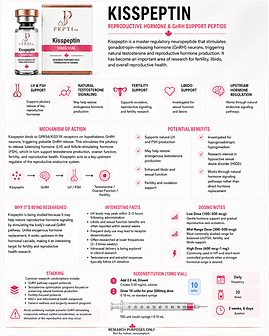
Reconstitution (10 mg Vial)

Step 1

Add 2.0 mL diluent.

Creates a 5.0 mg/mL solution.

Step 2

Draw 10 units for a 500 mcg dose.

  • 10 mL on a standard insulin syringe
  • 100-unit insulin syringe

Quick Reference

Frequency: Daily

Doses per vial: 20 doses (at 500 mcg)

Approximate vial duration: Approximately 2 weeks and 6 days

Disclaimer

For research use only. Not for human consumption.

The dosing information provided is intended solely for laboratory and research purposes and is not medical advice. Always consult qualified professionals regarding research protocols.

These statements have not been evaluated by Health Canada or the U.S. Food and Drug Administration (FDA).

Mechanism of Action

Research suggests Kisspeptin supports reproductive hormone regulation through several complementary mechanisms:

  • Binds to GPR54 (KISS1R) receptors on hypothalamic GnRH neurons.
  • Stimulates pulsatile release of gonadotropin-releasing hormone (GnRH).
  • Promotes pituitary release of luteinizing hormone (LH) and follicle-stimulating hormone (FSH).
  • Supports the body’s natural production of testosterone and estrogen.
  • Regulates ovulation, fertility, and reproductive function through the hypothalamic-pituitary-gonadal (HPG) axis.
  • Acts upstream of reproductive hormones, supporting natural endocrine signaling rather than replacing hormones directly.
  • Helps maintain physiologic reproductive hormone balance through endogenous hormone production.
  • Supports natural LH and FSH production
  • May help restore endogenous testosterone production
  • Supports healthy estrogen production and ovulation
  • Enhanced libido and sexual function
  • Fertility and reproductive health support
  • Investigated for hypogonadotropic hypogonadism
  • Research interest in hypoactive sexual desire disorder (HSDD)
  • Supports natural hormone regulation without direct hormone replacement

Goal

Dose

Route

Frequency

No data was found

Reconstitution (10 mg Vial)

Step 1

Add 2.0 mL diluent.

Creates a 5.0 mg/mL solution.

Step 2

Draw 10 units for a 500 mcg dose.

  • 10 mL on a standard insulin syringe
  • 100-unit insulin syringe

Quick Reference

Frequency: Daily

Doses per vial: 20 doses (at 500 mcg)

Approximate vial duration: Approximately 2 weeks and 6 days

Days 1–7

Initial Hormonal Response

Weeks 2–4

Reproductive Hormone Support

Weeks 4–8

Continued Benefits

Timeline

Days 1–7

Initial Hormonal Response

Weeks 2–4

Reproductive Hormone Support

Weeks 4–8

Continued Benefits

PRODUCT USAGE DISCLAIMER

This product is intended strictly for research and laboratory purposes only. It is not approved for human or veterinary use. This compound is supplied exclusively for in-vitro research, analytical testing, and scientific investigation.

All information provided on this website is for educational and research reference purposes only. These products are not drugs, supplements, food products, or cosmetics and must not be used, consumed, or administered to humans or animals.

By purchasing, the customer acknowledges that these products are intended solely for qualified research professionals and must be handled according to appropriate laboratory safety guidelines.

Mechanism of Action

Research suggests Kisspeptin supports reproductive hormone regulation through several complementary mechanisms:

  • Binds to GPR54 (KISS1R) receptors on hypothalamic GnRH neurons.
  • Stimulates pulsatile release of gonadotropin-releasing hormone (GnRH).
  • Promotes pituitary release of luteinizing hormone (LH) and follicle-stimulating hormone (FSH).
  • Supports the body's natural production of testosterone and estrogen.
  • Regulates ovulation, fertility, and reproductive function through the hypothalamic-pituitary-gonadal (HPG) axis.
  • Acts upstream of reproductive hormones, supporting natural endocrine signaling rather than replacing hormones directly.
  • Helps maintain physiologic reproductive hormone balance through endogenous hormone production.

Potential Benefits

No data was found

Research Protocols

Goal

Dose

Route

Frequency

No data was found

Mechanism of Action

Reconstitution (10 mg Vial)

Step 1

Add 2.0 mL diluent.

Creates a 5.0 mg/mL solution.

Step 2

Draw 10 units for a 500 mcg dose.

  • 10 mL on a standard insulin syringe
  • 100-unit insulin syringe

Quick Reference

Frequency: Daily

Doses per vial: 20 doses (at 500 mcg)

Approximate vial duration: Approximately 2 weeks and 6 days

Research Protocols

Goal

Dose

Route

Frequency

No data was found

Timeline

Days 1–7

Initial Hormonal Response

Weeks 2–4

Reproductive Hormone Support

Weeks 4–8

Continued Benefits

Related Products