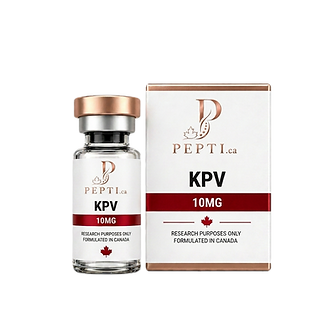
KPV (Lys-Pro-Val)

Home / KPV (Lys-Pro-Val)

KPV (Lys-Pro-Val)

Product Description & Research Overview

KPV (Lys-Pro-Val) is a naturally occurring tripeptide derived from alpha-melanocyte stimulating hormone (α-MSH). Unlike its parent hormone, KPV retains powerful anti-inflammatory properties without producing significant melanogenic (skin tanning) effects. It has become an important area of research for its ability to reduce localized and systemic inflammation while preserving normal immune function.

Rather than broadly suppressing the immune system, KPV appears to regulate inflammatory signaling pathways responsible for excessive cytokine production. This unique mechanism has generated significant research interest in gastrointestinal health, autoimmune conditions, inflammatory skin disorders, and chronic inflammatory diseases.

Researchers continue to investigate KPV for its potential to support intestinal barrier integrity, promote gut healing, reduce inflammatory bowel symptoms, improve skin health, and help regulate excessive immune activation without compromising the body’s natural defense mechanisms. Because of its small molecular size and excellent tissue penetration, KPV has also been studied in injectable, oral, topical, intranasal, and transdermal formulations.

Mechanism of Action

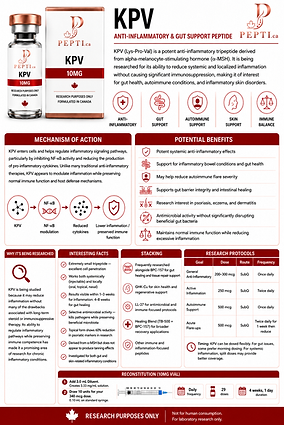
Research suggests KPV supports healthy inflammatory regulation through several complementary mechanisms:

  • Modulates the NF-κB signaling pathway, a major regulator of inflammation.
  • Reduces production of pro-inflammatory cytokines.
  • Helps regulate excessive immune activation while preserving normal immune function.
  • Supports intestinal barrier integrity and healthy gastrointestinal function.
  • Demonstrates antimicrobial activity while largely preserving beneficial gut microbiota.
  • Supports tissue repair by reducing inflammatory damage.
  • May help protect skin and mucosal tissues from inflammatory injury.
  • Potent systemic anti-inflammatory support
  • Supports inflammatory bowel health and gastrointestinal function
  • May help reduce autoimmune flare severity
  • Supports intestinal barrier integrity and gut healing
  • Investigated for psoriasis, eczema, dermatitis, and other inflammatory skin conditions
  • Demonstrates antimicrobial activity without significantly disrupting beneficial gut bacteria
  • Helps maintain normal immune function while reducing excessive inflammation

Goal

Dose

Route

Frequency

No data was found

Timing: KPV may be administered at any time of day. For gastrointestinal research, morning administration is commonly used, while divided dosing may provide more consistent coverage in systemic inflammatory studies.

Reconstitution (10 mg Vial)

Step 1

Add 3.0 mL diluent.

Creates a 3.33 mg/mL solution.

Step 2

Draw 10 units for approximately a 330–340 mcg dose.

  • 10 mL on a standard insulin syringe
  • 100-unit insulin syringe

Quick Reference

Frequency: Daily

Doses per vial: Approximately 29 doses (at ~340 mcg)

Approximate vial duration: Approximately 4 weeks and 1 day

Interesting Facts

  • Extremely small tripeptide with excellent tissue penetration.
  • Studied in injectable, oral, topical, intranasal, and transdermal formulations.
  • Early improvements in inflammation are often reported within 1–3 weeks, while gut healing may require 4–8 weeks of continued research.
  • Demonstrates selective antimicrobial activity while preserving beneficial intestinal microbiota.
  • Derived from α-MSH but does not appear to produce significant skin tanning effects.
  • Extensively researched for both gastrointestinal and inflammatory skin conditions.

Stacking Considerations

KPV is commonly researched alongside:

  • BPC-157 for gastrointestinal repair and tissue healing.
  • GHK-Cu for skin regeneration and wound healing.
  • LL-37 for antimicrobial and immune-focused research.
  • Healing Blend (TB-500 + BPC-157) for broader recovery and regenerative support.
  • Other peptides targeting inflammation and immune regulation.

Safety & Interactions

  • Generally well tolerated within researched dosing ranges.
  • Appears to regulate inflammation without causing significant immunosuppression.
  • Frequently researched alongside regenerative and gut-support peptides.
  • No well-established major negative interactions have been identified in current research literature.

Disclaimer

For research use only. Not for human consumption.

The dosing information provided is intended solely for laboratory and research purposes and is not medical advice. Always consult qualified professionals regarding research protocols.

These statements have not been evaluated by Health Canada or the U.S. Food and Drug Administration (FDA).

Mechanism of Action

Research suggests KPV supports healthy inflammatory regulation through several complementary mechanisms:

  • Modulates the NF-κB signaling pathway, a major regulator of inflammation.
  • Reduces production of pro-inflammatory cytokines.
  • Helps regulate excessive immune activation while preserving normal immune function.
  • Supports intestinal barrier integrity and healthy gastrointestinal function.
  • Demonstrates antimicrobial activity while largely preserving beneficial gut microbiota.
  • Supports tissue repair by reducing inflammatory damage.
  • May help protect skin and mucosal tissues from inflammatory injury.
  • Potent systemic anti-inflammatory support
  • Supports inflammatory bowel health and gastrointestinal function
  • May help reduce autoimmune flare severity
  • Supports intestinal barrier integrity and gut healing
  • Investigated for psoriasis, eczema, dermatitis, and other inflammatory skin conditions
  • Demonstrates antimicrobial activity without significantly disrupting beneficial gut bacteria
  • Helps maintain normal immune function while reducing excessive inflammation

Goal

Dose

Route

Frequency

No data was found

Timing: KPV may be administered at any time of day. For gastrointestinal research, morning administration is commonly used, while divided dosing may provide more consistent coverage in systemic inflammatory studies.

Reconstitution (10 mg Vial)

Step 1

Add 3.0 mL diluent.

Creates a 3.33 mg/mL solution.

Step 2

Draw 10 units for approximately a 330–340 mcg dose.

  • 10 mL on a standard insulin syringe
  • 100-unit insulin syringe

Quick Reference

Frequency: Daily

Doses per vial: Approximately 29 doses (at ~340 mcg)

Approximate vial duration: Approximately 4 weeks and 1 day

Interesting Facts

  • Extremely small tripeptide with excellent tissue penetration.
  • Studied in injectable, oral, topical, intranasal, and transdermal formulations.
  • Early improvements in inflammation are often reported within 1–3 weeks, while gut healing may require 4–8 weeks of continued research.
  • Demonstrates selective antimicrobial activity while preserving beneficial intestinal microbiota.
  • Derived from α-MSH but does not appear to produce significant skin tanning effects.
  • Extensively researched for both gastrointestinal and inflammatory skin conditions.

Stacking Considerations

KPV is commonly researched alongside:

  • BPC-157 for gastrointestinal repair and tissue healing.
  • GHK-Cu for skin regeneration and wound healing.
  • LL-37 for antimicrobial and immune-focused research.
  • Healing Blend (TB-500 + BPC-157) for broader recovery and regenerative support.
  • Other peptides targeting inflammation and immune regulation.

Weeks 1–3

Early Response

Weeks 4–8

Continued Healing

Timeline

Weeks 1–3

Early Response

Weeks 4–8

Continued Healing

PRODUCT USAGE DISCLAIMER

This product is intended strictly for research and laboratory purposes only. It is not approved for human or veterinary use. This compound is supplied exclusively for in-vitro research, analytical testing, and scientific investigation.

All information provided on this website is for educational and research reference purposes only. These products are not drugs, supplements, food products, or cosmetics and must not be used, consumed, or administered to humans or animals.

By purchasing, the customer acknowledges that these products are intended solely for qualified research professionals and must be handled according to appropriate laboratory safety guidelines.

Mechanism of Action

Research suggests KPV supports healthy inflammatory regulation through several complementary mechanisms:

  • Modulates the NF-κB signaling pathway, a major regulator of inflammation.
  • Reduces production of pro-inflammatory cytokines.
  • Helps regulate excessive immune activation while preserving normal immune function.
  • Supports intestinal barrier integrity and healthy gastrointestinal function.
  • Demonstrates antimicrobial activity while largely preserving beneficial gut microbiota.
  • Supports tissue repair by reducing inflammatory damage.
  • May help protect skin and mucosal tissues from inflammatory injury.

Potential Benefits

No data was found

Research Protocols

Goal

Dose

Route

Frequency

No data was found

Mechanism of Action

Timing: KPV may be administered at any time of day. For gastrointestinal research, morning administration is commonly used, while divided dosing may provide more consistent coverage in systemic inflammatory studies.

Reconstitution (10 mg Vial)

Step 1

Add 3.0 mL diluent.

Creates a 3.33 mg/mL solution.

Step 2

Draw 10 units for approximately a 330–340 mcg dose.

  • 10 mL on a standard insulin syringe
  • 100-unit insulin syringe

Quick Reference

Frequency: Daily

Doses per vial: Approximately 29 doses (at ~340 mcg)

Approximate vial duration: Approximately 4 weeks and 1 day

Interesting Facts

  • Extremely small tripeptide with excellent tissue penetration.
  • Studied in injectable, oral, topical, intranasal, and transdermal formulations.
  • Early improvements in inflammation are often reported within 1–3 weeks, while gut healing may require 4–8 weeks of continued research.
  • Demonstrates selective antimicrobial activity while preserving beneficial intestinal microbiota.
  • Derived from α-MSH but does not appear to produce significant skin tanning effects.
  • Extensively researched for both gastrointestinal and inflammatory skin conditions.

Stacking Considerations

KPV is commonly researched alongside:

  • BPC-157 for gastrointestinal repair and tissue healing.
  • GHK-Cu for skin regeneration and wound healing.
  • LL-37 for antimicrobial and immune-focused research.
  • Healing Blend (TB-500 + BPC-157) for broader recovery and regenerative support.
  • Other peptides targeting inflammation and immune regulation.

Research Protocols

Goal

Dose

Route

Frequency

No data was found

Timeline

Weeks 1–3

Early Response

Weeks 4–8

Continued Healing

Related Products