
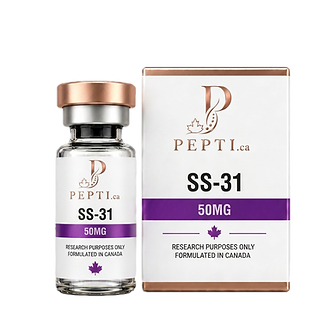
SS-31 (Elamipretide)

Home / SS-31 (Elamipretide)

SS-31 (Elamipretide)

Product Description & Research Overview

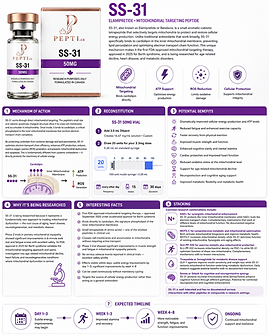
SS-31, also known as Elamipretide or Bendavia, is a small mitochondria-targeting tetrapeptide designed to protect and restore cellular energy production. Unlike traditional antioxidants that broadly neutralize free radicals, SS-31 selectively binds to cardiolipin, a unique phospholipid found in the inner mitochondrial membrane, helping maintain mitochondrial structure and optimize ATP production.

By protecting cardiolipin from oxidative damage, SS-31 supports healthy electron transport chain function, reduces reactive oxygen species (ROS), and helps preserve mitochondrial integrity. This unique mechanism has made SS-31 one of the most extensively researched mitochondrial-targeting peptides for age-related decline, cardiovascular health, neurological disorders, metabolic dysfunction, muscle performance, and healthy aging.

Researchers continue to investigate SS-31 because mitochondrial dysfunction is believed to contribute to numerous chronic diseases and age-related conditions. Clinical and preclinical research suggests SS-31 may improve cellular energy production, reduce oxidative stress, enhance exercise capacity, support cognitive function, promote cardiovascular health, and improve metabolic resilience by restoring mitochondrial function at its source.

Mechanism of Action

Research suggests SS-31 supports mitochondrial health through several complementary mechanisms:

  • Selectively binds to cardiolipin in the inner mitochondrial membrane.
  • Protects cardiolipin from oxidative damage and lipid peroxidation.
  • Stabilizes the electron transport chain to improve ATP production.
  • Reduces excessive production of reactive oxygen species (ROS).
  • Supports mitochondrial membrane integrity and function.
  • Improves cellular energy production and metabolic efficiency.
  • Enhances resistance to oxidative stress and cellular injury.
  • Supports mitochondrial resilience during aging and metabolic stress.
  • Supports healthy ATP production and cellular energy
  • May reduce fatigue and improve exercise capacity
  • Supports faster recovery following physical activity
  • May improve muscle strength and physical performance
  • Supports cognitive clarity and mental stamina
  • Promotes cardiovascular health and mitochondrial function
  • Reduces oxidative stress at the mitochondrial level
  • Supports healthy aging and metabolic function
  • May provide neuroprotective support

Goal

Dose

Route

Frequency

No data was found

Reconstitution (50 mg Vial)

Step 1

Add 3.0 mL diluent.

Creates a 16.67 mg/mL solution.

Step 2

Draw 20 units for approximately a 3.3 mg dose.

  • 20 mL on a standard insulin syringe
  • 100-unit insulin syringe

Quick Reference

Frequency: Every other day

Doses per vial: Approximately 15 doses

Approximate vial duration: Approximately 30 days

Disclaimer

For research use only. Not for human consumption.

The information provided is intended solely for laboratory and research purposes and is not medical advice. Always consult qualified professionals regarding research protocols.

These statements have not been evaluated by Health Canada or the U.S. Food and Drug Administration (FDA).

Mechanism of Action

Research suggests SS-31 supports mitochondrial health through several complementary mechanisms:

  • Selectively binds to cardiolipin in the inner mitochondrial membrane.
  • Protects cardiolipin from oxidative damage and lipid peroxidation.
  • Stabilizes the electron transport chain to improve ATP production.
  • Reduces excessive production of reactive oxygen species (ROS).
  • Supports mitochondrial membrane integrity and function.
  • Improves cellular energy production and metabolic efficiency.
  • Enhances resistance to oxidative stress and cellular injury.
  • Supports mitochondrial resilience during aging and metabolic stress.
  • Supports healthy ATP production and cellular energy
  • May reduce fatigue and improve exercise capacity
  • Supports faster recovery following physical activity
  • May improve muscle strength and physical performance
  • Supports cognitive clarity and mental stamina
  • Promotes cardiovascular health and mitochondrial function
  • Reduces oxidative stress at the mitochondrial level
  • Supports healthy aging and metabolic function
  • May provide neuroprotective support

Goal

Dose

Route

Frequency

No data was found

Reconstitution (50 mg Vial)

Step 1

Add 3.0 mL diluent.

Creates a 16.67 mg/mL solution.

Step 2

Draw 20 units for approximately a 3.3 mg dose.

  • 20 mL on a standard insulin syringe
  • 100-unit insulin syringe

Quick Reference

Frequency: Every other day

Doses per vial: Approximately 15 doses

Approximate vial duration: Approximately 30 days

Days 1–3

Early Cellular Response

Weeks 1–3

Improved Performance

Weeks 4–8

Continued Benefits

Ongoing Research

Continued investigation suggests sustained mitochondrial support, improved metabolic flexibility, and enhanced cellular resilience with longer-term administration.
Timeline

Days 1–3

Early Cellular Response

Weeks 1–3

Improved Performance

Weeks 4–8

Continued Benefits

Ongoing Research

Continued investigation suggests sustained mitochondrial support, improved metabolic flexibility, and enhanced cellular resilience with longer-term administration.

PRODUCT USAGE DISCLAIMER

This product is intended strictly for research and laboratory purposes only. It is not approved for human or veterinary use. This compound is supplied exclusively for in-vitro research, analytical testing, and scientific investigation.

All information provided on this website is for educational and research reference purposes only. These products are not drugs, supplements, food products, or cosmetics and must not be used, consumed, or administered to humans or animals.

By purchasing, the customer acknowledges that these products are intended solely for qualified research professionals and must be handled according to appropriate laboratory safety guidelines.

Mechanism of Action

Research suggests SS-31 supports mitochondrial health through several complementary mechanisms:

  • Selectively binds to cardiolipin in the inner mitochondrial membrane.
  • Protects cardiolipin from oxidative damage and lipid peroxidation.
  • Stabilizes the electron transport chain to improve ATP production.
  • Reduces excessive production of reactive oxygen species (ROS).
  • Supports mitochondrial membrane integrity and function.
  • Improves cellular energy production and metabolic efficiency.
  • Enhances resistance to oxidative stress and cellular injury.
  • Supports mitochondrial resilience during aging and metabolic stress.

Potential Benefits

No data was found

Research Protocols

Goal

Dose

Route

Frequency

No data was found

Mechanism of Action

Reconstitution (50 mg Vial)

Step 1

Add 3.0 mL diluent.

Creates a 16.67 mg/mL solution.

Step 2

Draw 20 units for approximately a 3.3 mg dose.

  • 20 mL on a standard insulin syringe
  • 100-unit insulin syringe

Quick Reference

Frequency: Every other day

Doses per vial: Approximately 15 doses

Approximate vial duration: Approximately 30 days

Research Protocols

Goal

Dose

Route

Frequency

No data was found

Timeline

Days 1–3

Early Cellular Response

Weeks 1–3

Improved Performance

Weeks 4–8

Continued Benefits

Ongoing Research

Continued investigation suggests sustained mitochondrial support, improved metabolic flexibility, and enhanced cellular resilience with longer-term administration.
Related Products