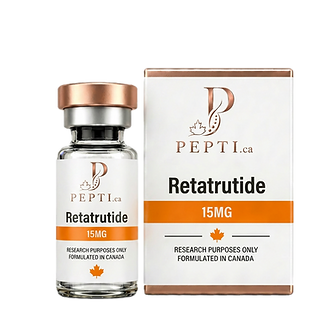
Product Description & Research Overview
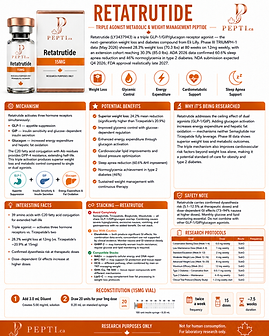
Retatrutide (LY3437943) is a next-generation triple hormone receptor agonist that simultaneously activates the GLP-1, GIP, and glucagon receptors. Developed by Eli Lilly, it is one of the most advanced investigational compounds being studied for obesity, type 2 diabetes, and metabolic disease. Unlike dual agonists such as tirzepatide, Retatrutide adds glucagon receptor activation to increase energy expenditure and fat oxidation while preserving the appetite suppression and insulin-sensitizing effects of GLP-1 and GIP.
This unique triple-agonist mechanism has produced some of the largest weight-loss results reported in clinical research. Phase III TRIUMPH-1 trial data (2026) demonstrated average weight reductions of approximately 28.3% at 80 weeks, with an extension cohort reporting 30.3% weight loss. Additional research has shown significant improvements in glycemic control, liver fat metabolism, cardiovascular risk factors, and sleep apnea severity. In studies involving individuals with type 2 diabetes, nearly half achieved normoglycemia during treatment.
Retatrutide contains 39 amino acids with a C20 fatty acid side chain, extending its half-life for convenient once-weekly dosing. Researchers continue to investigate its potential as a comprehensive metabolic therapy capable of addressing obesity, insulin resistance, fatty liver disease, cardiovascular health, and obesity-related complications. Although Phase III clinical trials are ongoing, Retatrutide remains an investigational therapy and has not yet received regulatory approval.
Research suggests Retatrutide supports metabolic health through three complementary pathways:
Reconstitution (10 mg Vial)
Step 1
Add 2.0 mL diluent.
Creates a 5 mg/mL solution.
Step 2
Draw 20 units for a 1 mg research starting dose.
Reconstitution (15 mg Vial)
Step 1
Add 3.0 mL diluent.
Creates a 5 mg/mL solution.
Step 2
Draw 20 units for a 1 mg research starting dose.
Reconstitution (20 mg Vial)
Step 1
Add 2.0 mL diluent.
Creates a 10 mg/mL solution.
Step 2
Draw 10 units for a 1 mg research starting dose.
Reconstitution (30 mg Vial)
Step 1
Add 3.0 mL diluent.
Creates a 10 mg/mL solution.
Step 2
Draw 10 units for a 1 mg research starting dose.
Disclaimer
For research use only. Not for human consumption.
This information is intended for educational and laboratory research purposes only and is not medical advice. Retatrutide remains an investigational compound and has not been approved by Health Canada or the U.S. Food and Drug Administration (FDA).
Research suggests Retatrutide supports metabolic health through three complementary pathways:
Reconstitution (10 mg Vial)
Step 1
Add 2.0 mL diluent.
Creates a 5 mg/mL solution.
Step 2
Draw 20 units for a 1 mg research starting dose.
Reconstitution (15 mg Vial)
Step 1
Add 3.0 mL diluent.
Creates a 5 mg/mL solution.
Step 2
Draw 20 units for a 1 mg research starting dose.
Reconstitution (20 mg Vial)
Step 1
Add 2.0 mL diluent.
Creates a 10 mg/mL solution.
Step 2
Draw 10 units for a 1 mg research starting dose.
Reconstitution (30 mg Vial)
Step 1
Add 3.0 mL diluent.
Creates a 10 mg/mL solution.
Step 2
Draw 10 units for a 1 mg research starting dose.
Appetite reduction and improvements in blood glucose regulation may begin. Gastrointestinal side effects are most likely during dose escalation.
Progressive weight loss, improved insulin sensitivity, and enhanced fat metabolism become more apparent.
Clinical studies demonstrate continued reductions in body weight, improvements in metabolic markers, and enhanced cardiovascular health.
Ongoing studies continue to evaluate Retatrutide for obesity, type 2 diabetes, metabolic syndrome, fatty liver disease, cardiovascular disease, and long-term weight maintenance.
Appetite reduction and improvements in blood glucose regulation may begin. Gastrointestinal side effects are most likely during dose escalation.
Progressive weight loss, improved insulin sensitivity, and enhanced fat metabolism become more apparent.
Clinical studies demonstrate continued reductions in body weight, improvements in metabolic markers, and enhanced cardiovascular health.
Ongoing studies continue to evaluate Retatrutide for obesity, type 2 diabetes, metabolic syndrome, fatty liver disease, cardiovascular disease, and long-term weight maintenance.
Research suggests Retatrutide supports metabolic health through three complementary pathways:
Reconstitution (10 mg Vial)
Step 1
Add 2.0 mL diluent.
Creates a 5 mg/mL solution.
Step 2
Draw 20 units for a 1 mg research starting dose.
Reconstitution (15 mg Vial)
Step 1
Add 3.0 mL diluent.
Creates a 5 mg/mL solution.
Step 2
Draw 20 units for a 1 mg research starting dose.
Reconstitution (20 mg Vial)
Step 1
Add 2.0 mL diluent.
Creates a 10 mg/mL solution.
Step 2
Draw 10 units for a 1 mg research starting dose.
Reconstitution (30 mg Vial)
Step 1
Add 3.0 mL diluent.
Creates a 10 mg/mL solution.
Step 2
Draw 10 units for a 1 mg research starting dose.
Appetite reduction and improvements in blood glucose regulation may begin. Gastrointestinal side effects are most likely during dose escalation.
Progressive weight loss, improved insulin sensitivity, and enhanced fat metabolism become more apparent.
Clinical studies demonstrate continued reductions in body weight, improvements in metabolic markers, and enhanced cardiovascular health.
Ongoing studies continue to evaluate Retatrutide for obesity, type 2 diabetes, metabolic syndrome, fatty liver disease, cardiovascular disease, and long-term weight maintenance.