BPC-157

Home / BPC-157

BPC-157

The Ultimate Healing Peptide

BPC-157 (Body Protection Compound-157) is a synthetic 15-amino acid peptide derived from a protective protein naturally found in human gastric juice. It is one of the most extensively researched peptides for tissue repair and regeneration, with studies investigating its effects on tendons, ligaments, muscles, bones, nerves, skin, blood vessels, and the gastrointestinal tract.

Research suggests BPC-157 may support the body’s natural healing processes by promoting healthy blood vessel formation, collagen production, and organized tissue regeneration while helping regulate inflammatory responses. Unlike many compounds that focus primarily on reducing inflammation or stimulating growth, BPC-157 has demonstrated both tissue-protective and regenerative properties in preclinical studies.

Because it remains stable in stomach acid, BPC-157 is unique among many peptides and has been researched in both oral and injectable forms. Animal studies have consistently reported accelerated healing, improved collagen organization, enhanced angiogenesis, protection against gastric injury, and improved recovery across multiple tissue types.

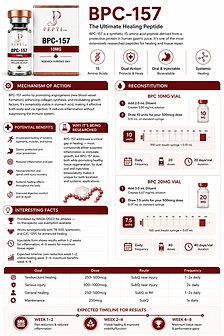
Mechanism of Action

Research suggests BPC-157 may support tissue repair through several complementary mechanisms:

  • Stimulates angiogenesis (formation of new blood vessels) to improve nutrient and oxygen delivery.
  • Enhances collagen synthesis and supports proper collagen organization during healing.
  • Promotes fibroblast migration and tissue remodeling.
  • Modulates growth factor pathways involved in tissue repair and regeneration.
  • Helps regulate nitric oxide (NO) signaling, supporting circulation and vascular function.
  • Supports tendon, ligament, muscle, bone, nerve, skin, and gastrointestinal tissue healing.
  • Helps reduce inflammation while preserving normal immune function.
  • Demonstrates tissue-protective effects that may support both localized and systemic healing.
  • Accelerated healing of tendons, ligaments, muscles, and bones
  • Gastric protection and support for ulcer healing
  • Reduced inflammation and discomfort
  • Neuroprotective effects and spinal cord recovery support
  • Systemic healing throughout the body
  • Improved digestive comfort and gastrointestinal repair

Goal

Dose

Route

Frequency

Tendon / Joint Healing
250–500 mcg
SubQ near injury
1–2x daily
Serious Injury
500–1000 mcg
SubQ near injury
2x daily
Maintenance
250 mcg
SubQ
1x daily

BPC-157 10 mg Vial

Step 1

Add 2.0 mL diluent. Creates a 5.0 mg/mL solution.

Step 2

Draw 10 units for a 500 mcg dose.

  • 10 mL on a standard insulin syringe
  • 100-unit insulin syringe

Quick Reference

Frequency: Daily. Doses per vial: 20. Approximate vial duration: 20 days

BPC-157 20 mg Vial

Step 1

Add 3.0 mL diluent. Creates a 6.67 mg/mL solution.

Step 2

Draw 7.5 units for a 500 mcg dose.

  • 075 mL on a standard insulin syringe
  • 100-unit insulin syringe

Quick Reference

Frequency: Daily Doses per vial: 40 Approximate vial duration: 40 days

Disclaimer

For research use only. Not for human consumption.

The dosing information above is intended solely for laboratory and research purposes. It is not medical advice and should not be interpreted as a recommendation for human use. Always consult qualified professionals regarding research protocols.

These statements have not been evaluated by Health Canada or the U.S. Food and Drug Administration (FDA).

Mechanism of Action

Research suggests BPC-157 may support tissue repair through several complementary mechanisms:

  • Stimulates angiogenesis (formation of new blood vessels) to improve nutrient and oxygen delivery.
  • Enhances collagen synthesis and supports proper collagen organization during healing.
  • Promotes fibroblast migration and tissue remodeling.
  • Modulates growth factor pathways involved in tissue repair and regeneration.
  • Helps regulate nitric oxide (NO) signaling, supporting circulation and vascular function.
  • Supports tendon, ligament, muscle, bone, nerve, skin, and gastrointestinal tissue healing.
  • Helps reduce inflammation while preserving normal immune function.
  • Demonstrates tissue-protective effects that may support both localized and systemic healing.
  • Accelerated healing of tendons, ligaments, muscles, and bones
  • Gastric protection and support for ulcer healing
  • Reduced inflammation and discomfort
  • Neuroprotective effects and spinal cord recovery support
  • Systemic healing throughout the body
  • Improved digestive comfort and gastrointestinal repair

Goal

Dose

Route

Frequency

Tendon / Joint Healing
250–500 mcg
SubQ near injury
1–2x daily
Serious Injury
500–1000 mcg
SubQ near injury
2x daily
Maintenance
250 mcg
SubQ
1x daily

BPC-157 10 mg Vial

Step 1

Add 2.0 mL diluent. Creates a 5.0 mg/mL solution.

Step 2

Draw 10 units for a 500 mcg dose.

  • 10 mL on a standard insulin syringe
  • 100-unit insulin syringe

Quick Reference

Frequency: Daily. Doses per vial: 20. Approximate vial duration: 20 days

BPC-157 20 mg Vial

Step 1

Add 3.0 mL diluent. Creates a 6.67 mg/mL solution.

Step 2

Draw 7.5 units for a 500 mcg dose.

  • 075 mL on a standard insulin syringe
  • 100-unit insulin syringe

Quick Reference

Frequency: Daily Doses per vial: 40 Approximate vial duration: 40 days

1–2 Weeks

Pain Reduction & Reduced Inflammation

2–4 Weeks

Visible Healing & Improved Mobility

4–8 Weeks

Maximum Tissue Repair

Timeline

1–2 Weeks

Pain Reduction & Reduced Inflammation

2–4 Weeks

Visible Healing & Improved Mobility

4–8 Weeks

Maximum Tissue Repair

PRODUCT USAGE DISCLAIMER

This product is intended strictly for research and laboratory purposes only. It is not approved for human or veterinary use. This compound is supplied exclusively for in-vitro research, analytical testing, and scientific investigation.

All information provided on this website is for educational and research reference purposes only. These products are not drugs, supplements, food products, or cosmetics and must not be used, consumed, or administered to humans or animals.

By purchasing, the customer acknowledges that these products are intended solely for qualified research professionals and must be handled according to appropriate laboratory safety guidelines.

Mechanism of Action

Research suggests BPC-157 may support tissue repair through several complementary mechanisms:

  • Stimulates angiogenesis (formation of new blood vessels) to improve nutrient and oxygen delivery.
  • Enhances collagen synthesis and supports proper collagen organization during healing.
  • Promotes fibroblast migration and tissue remodeling.
  • Modulates growth factor pathways involved in tissue repair and regeneration.
  • Helps regulate nitric oxide (NO) signaling, supporting circulation and vascular function.
  • Supports tendon, ligament, muscle, bone, nerve, skin, and gastrointestinal tissue healing.
  • Helps reduce inflammation while preserving normal immune function.
  • Demonstrates tissue-protective effects that may support both localized and systemic healing.

Potential Benefits

Accelerated healing of tendons, ligaments, muscles, and bones
Gastric protection and support for ulcer healing
Reduced inflammation and discomfort
Neuroprotective effects and spinal cord recovery support
Systemic healing throughout the body
Improved digestive comfort and gastrointestinal repair

Research Protocols

Goal

Dose

Route

Frequency

Tendon / Joint Healing
250–500 mcg
SubQ near injury
1–2x daily
Serious Injury
500–1000 mcg
SubQ near injury
2x daily
Maintenance
250 mcg
SubQ
1x daily

Mechanism of Action

BPC-157 10 mg Vial

Step 1

Add 2.0 mL diluent. Creates a 5.0 mg/mL solution.

Step 2

Draw 10 units for a 500 mcg dose.

  • 10 mL on a standard insulin syringe
  • 100-unit insulin syringe

Quick Reference

Frequency: Daily. Doses per vial: 20. Approximate vial duration: 20 days

BPC-157 20 mg Vial

Step 1

Add 3.0 mL diluent. Creates a 6.67 mg/mL solution.

Step 2

Draw 7.5 units for a 500 mcg dose.

  • 075 mL on a standard insulin syringe
  • 100-unit insulin syringe

Quick Reference

Frequency: Daily Doses per vial: 40 Approximate vial duration: 40 days

Research Protocols

Goal

Dose

Route

Frequency

Tendon / Joint Healing
250–500 mcg
SubQ near injury
1–2x daily
Serious Injury
500–1000 mcg
SubQ near injury
2x daily
Maintenance
250 mcg
SubQ
1x daily

Timeline

1–2 Weeks

Pain Reduction & Reduced Inflammation

2–4 Weeks

Visible Healing & Improved Mobility

4–8 Weeks

Maximum Tissue Repair

Related Products