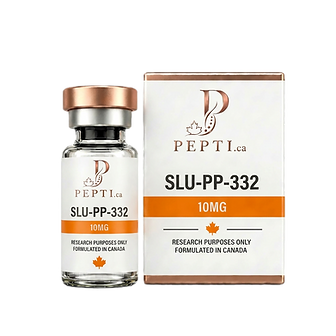
SLU-PP-332

Home / SLU-PP-332

SLU-PP-332

Product Description & Research Overview

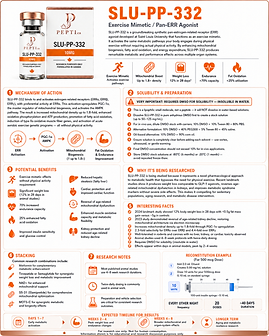
SLU-PP-332 is a synthetic Pan-ERR (estrogen-related receptor) agonist originally developed at Saint Louis University and classified as an exercise mimetic. Rather than acting as a stimulant, hormone, or GLP-1 receptor agonist, it activates many of the same metabolic pathways normally stimulated during endurance exercise by enhancing mitochondrial function and cellular energy production.

By activating ERRα, ERRβ, and ERRγ, SLU-PP-332 stimulates PGC-1α and AMPK signaling, leading to increased mitochondrial biogenesis, enhanced fatty acid oxidation, improved ATP production, and greater metabolic flexibility. Preclinical studies have demonstrated improvements in endurance capacity, insulin sensitivity, body composition, oxidative metabolism, and mitochondrial health without requiring increased physical activity.

Animal research has reported approximately 12% body-weight reduction over 28 days while preserving lean mass, along with increases in mitochondrial density of up to 1.8-fold. The compound also shows strong selectivity for ERRα, making it a unique approach to improving metabolic efficiency at the cellular level.

Researchers continue to investigate SLU-PP-332 for its potential role in obesity, metabolic syndrome, fatty liver disease, age-related mitochondrial decline, endurance performance, and healthy aging. Current evidence comes primarily from preclinical animal studies, and although early findings are promising, human clinical research remains limited. SLU-PP-332 remains an investigational compound with no approved therapeutic indication.

Mechanism of Action

Research suggests SLU-PP-332 supports metabolism through several complementary mechanisms:

  • Activates ERRα, ERRβ and ERRγ nuclear receptors
  • Stimulates PGC-1α and AMPK signaling
  • Increases mitochondrial biogenesis and density
  • Enhances ATP production and oxidative phosphorylation
  • Promotes fatty acid oxidation over glucose utilization
  • Increases expression of oxidative muscle fiber genes
  • Mimics many of the cellular adaptations associated with endurance exercise
  • Supports healthy mitochondrial function
  • May improve endurance and exercise capacity
  • Promotes fatty acid oxidation
  • Supports metabolic flexibility
  • May improve insulin sensitivity
  • Supports healthy body composition
  • May reduce accumulation of liver fat
  • Supports cardiovascular health
  • May help maintain mitochondrial function during aging
  • Enhances overall cellular energy production

Goal

Dose

Route

Frequency

No data was found

Solubility & Preparation

Important: SLU-PP-332 is not a peptide and does not dissolve in water.

It must first be dissolved in 100% DMSO, then slowly diluted into bacteriostatic water before use.

General Laboratory Preparation & Reconstitution

  1. Add 50 units (0.50 mL) of DMSO to the 10 mg SLU-PP-332 vial.
  2. Allow the powder to fully dissolve, then draw the entire solution back into the syringe.
  3. Using a new syringe, remove 50 units (0.50 mL) from a new 3 mL vial of bacteriostatic water, leaving 5 mL remaining.
  4. Slowly add the DMSO/SLU-PP-332 solution drop by drop into the bacteriostatic water.
  5. Allow the solution to fully mix before use.
  6. Draw 10 units for a 500 mcg research dose.


  • 10 mL on a standard insulin syringe
  • Approximately 20 doses per vial


Quick Reference

Vial Size: 10 mg

Frequency: Every other day (commonly reported in preclinical studies)

Approximate Doses: 20

Approximate Vial Duration: ~40 days

Mechanism of Action

Research suggests SLU-PP-332 supports metabolism through several complementary mechanisms:

  • Activates ERRα, ERRβ and ERRγ nuclear receptors
  • Stimulates PGC-1α and AMPK signaling
  • Increases mitochondrial biogenesis and density
  • Enhances ATP production and oxidative phosphorylation
  • Promotes fatty acid oxidation over glucose utilization
  • Increases expression of oxidative muscle fiber genes
  • Mimics many of the cellular adaptations associated with endurance exercise
  • Supports healthy mitochondrial function
  • May improve endurance and exercise capacity
  • Promotes fatty acid oxidation
  • Supports metabolic flexibility
  • May improve insulin sensitivity
  • Supports healthy body composition
  • May reduce accumulation of liver fat
  • Supports cardiovascular health
  • May help maintain mitochondrial function during aging
  • Enhances overall cellular energy production

Goal

Dose

Route

Frequency

No data was found

Solubility & Preparation

Important: SLU-PP-332 is not a peptide and does not dissolve in water.

It must first be dissolved in 100% DMSO, then slowly diluted into bacteriostatic water before use.

General Laboratory Preparation & Reconstitution

  1. Add 50 units (0.50 mL) of DMSO to the 10 mg SLU-PP-332 vial.
  2. Allow the powder to fully dissolve, then draw the entire solution back into the syringe.
  3. Using a new syringe, remove 50 units (0.50 mL) from a new 3 mL vial of bacteriostatic water, leaving 5 mL remaining.
  4. Slowly add the DMSO/SLU-PP-332 solution drop by drop into the bacteriostatic water.
  5. Allow the solution to fully mix before use.
  6. Draw 10 units for a 500 mcg research dose.


  • 10 mL on a standard insulin syringe
  • Approximately 20 doses per vial


Quick Reference

Vial Size: 10 mg

Frequency: Every other day (commonly reported in preclinical studies)

Approximate Doses: 20

Approximate Vial Duration: ~40 days

Days 1–7

Early metabolic activation and increased cellular energy production may begin.

Weeks 2–4

Animal studies suggest improvements in endurance, fat oxidation, mitochondrial activity, and metabolic efficiency.

Weeks 4–8

Continued mitochondrial adaptations with broader improvements in energy production, physical performance, and metabolic resilience.

Long-Term Research

Ongoing studies continue to investigate potential applications in healthy aging, obesity, metabolic disease, and mitochondrial health.
Timeline

Days 1–7

Early metabolic activation and increased cellular energy production may begin.

Weeks 2–4

Animal studies suggest improvements in endurance, fat oxidation, mitochondrial activity, and metabolic efficiency.

Weeks 4–8

Continued mitochondrial adaptations with broader improvements in energy production, physical performance, and metabolic resilience.

Long-Term Research

Ongoing studies continue to investigate potential applications in healthy aging, obesity, metabolic disease, and mitochondrial health.
PRODUCT USAGE DISCLAIMER

This product is intended strictly for research and laboratory purposes only. It is not approved for human or veterinary use. This compound is supplied exclusively for in-vitro research, analytical testing, and scientific investigation.

All information provided on this website is for educational and research reference purposes only. These products are not drugs, supplements, food products, or cosmetics and must not be used, consumed, or administered to humans or animals.

By purchasing, the customer acknowledges that these products are intended solely for qualified research professionals and must be handled according to appropriate laboratory safety guidelines.

Mechanism of Action

Research suggests SLU-PP-332 supports metabolism through several complementary mechanisms:

  • Activates ERRα, ERRβ and ERRγ nuclear receptors
  • Stimulates PGC-1α and AMPK signaling
  • Increases mitochondrial biogenesis and density
  • Enhances ATP production and oxidative phosphorylation
  • Promotes fatty acid oxidation over glucose utilization
  • Increases expression of oxidative muscle fiber genes
  • Mimics many of the cellular adaptations associated with endurance exercise

Potential Benefits

No data was found

Research Protocols

Goal

Dose

Route

Frequency

No data was found

Mechanism of Action

Solubility & Preparation

Important: SLU-PP-332 is not a peptide and does not dissolve in water.

It must first be dissolved in 100% DMSO, then slowly diluted into bacteriostatic water before use.

General Laboratory Preparation & Reconstitution

  1. Add 50 units (0.50 mL) of DMSO to the 10 mg SLU-PP-332 vial.
  2. Allow the powder to fully dissolve, then draw the entire solution back into the syringe.
  3. Using a new syringe, remove 50 units (0.50 mL) from a new 3 mL vial of bacteriostatic water, leaving 5 mL remaining.
  4. Slowly add the DMSO/SLU-PP-332 solution drop by drop into the bacteriostatic water.
  5. Allow the solution to fully mix before use.
  6. Draw 10 units for a 500 mcg research dose.


  • 10 mL on a standard insulin syringe
  • Approximately 20 doses per vial


Quick Reference

Vial Size: 10 mg

Frequency: Every other day (commonly reported in preclinical studies)

Approximate Doses: 20

Approximate Vial Duration: ~40 days

Research Protocols

Goal

Dose

Route

Frequency

No data was found

Timeline

Days 1–7

Early metabolic activation and increased cellular energy production may begin.

Weeks 2–4

Animal studies suggest improvements in endurance, fat oxidation, mitochondrial activity, and metabolic efficiency.

Weeks 4–8

Continued mitochondrial adaptations with broader improvements in energy production, physical performance, and metabolic resilience.

Long-Term Research

Ongoing studies continue to investigate potential applications in healthy aging, obesity, metabolic disease, and mitochondrial health.
Related Products